Vectra XR
A 3D configurator for products people buy before they exist.
Visit vectraxr.com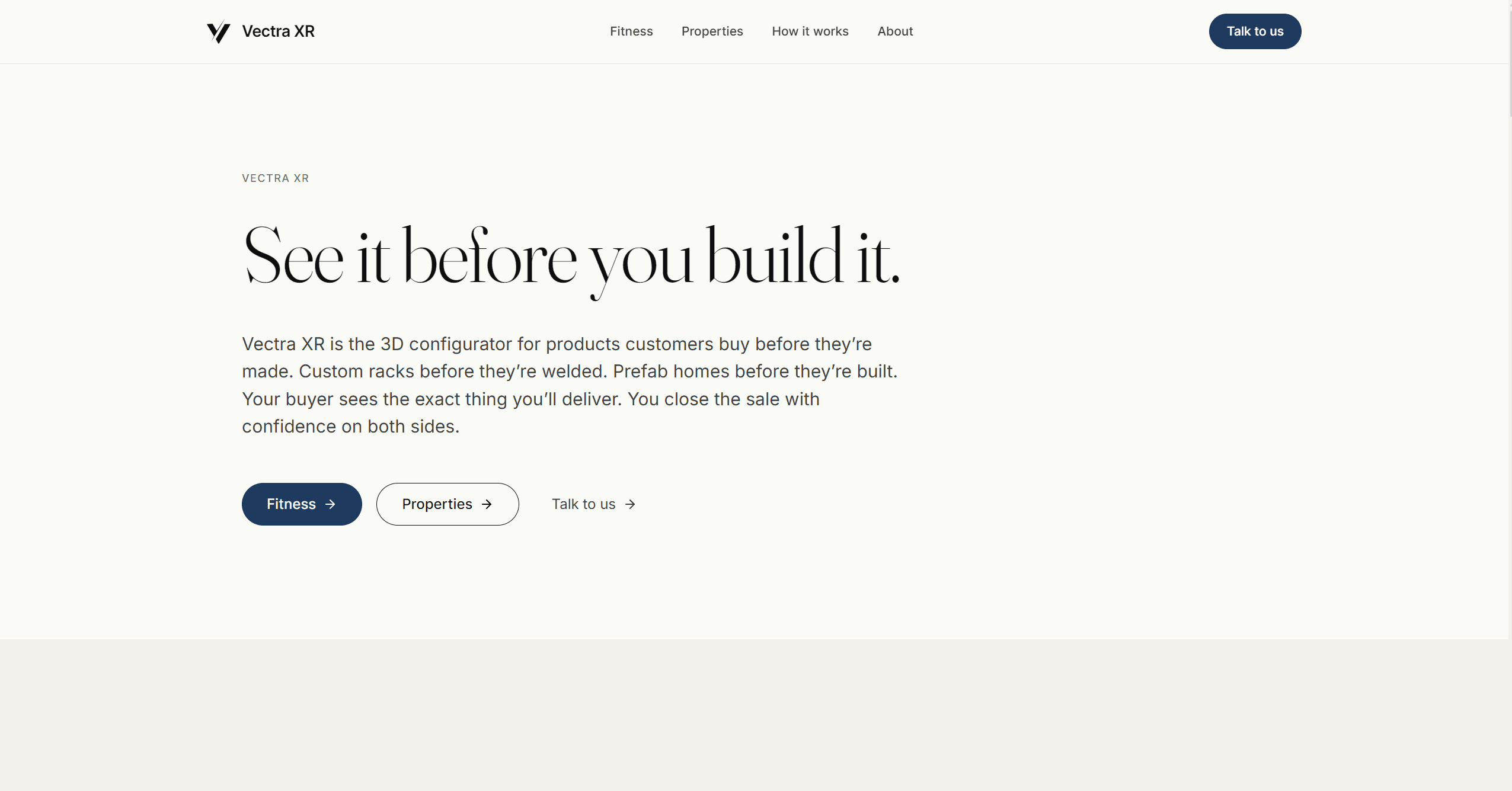
Static photos do not close five-figure decisions. When someone is about to commit to a custom rig, or to the home they will live in for the next decade, they need to see their configuration, in their space, at full scale. Most manufacturers still sell that with photoshoots that go stale and PDF spec sheets that come back with the same questions every time.
Sell the rack, not the spec sheet.
Customers configure a rack or rig, pick attachments, watch dimensions update, then point a phone at their garage and see it at full scale. The system blocks combinations that will not ship.
Try the live configuratorSell the home before it is built.
Buyers explore a prefab home in 3D before construction starts. Each prospect gets a private link to their own version, with the finishes and layout they chose, on any device.
Try the live configurator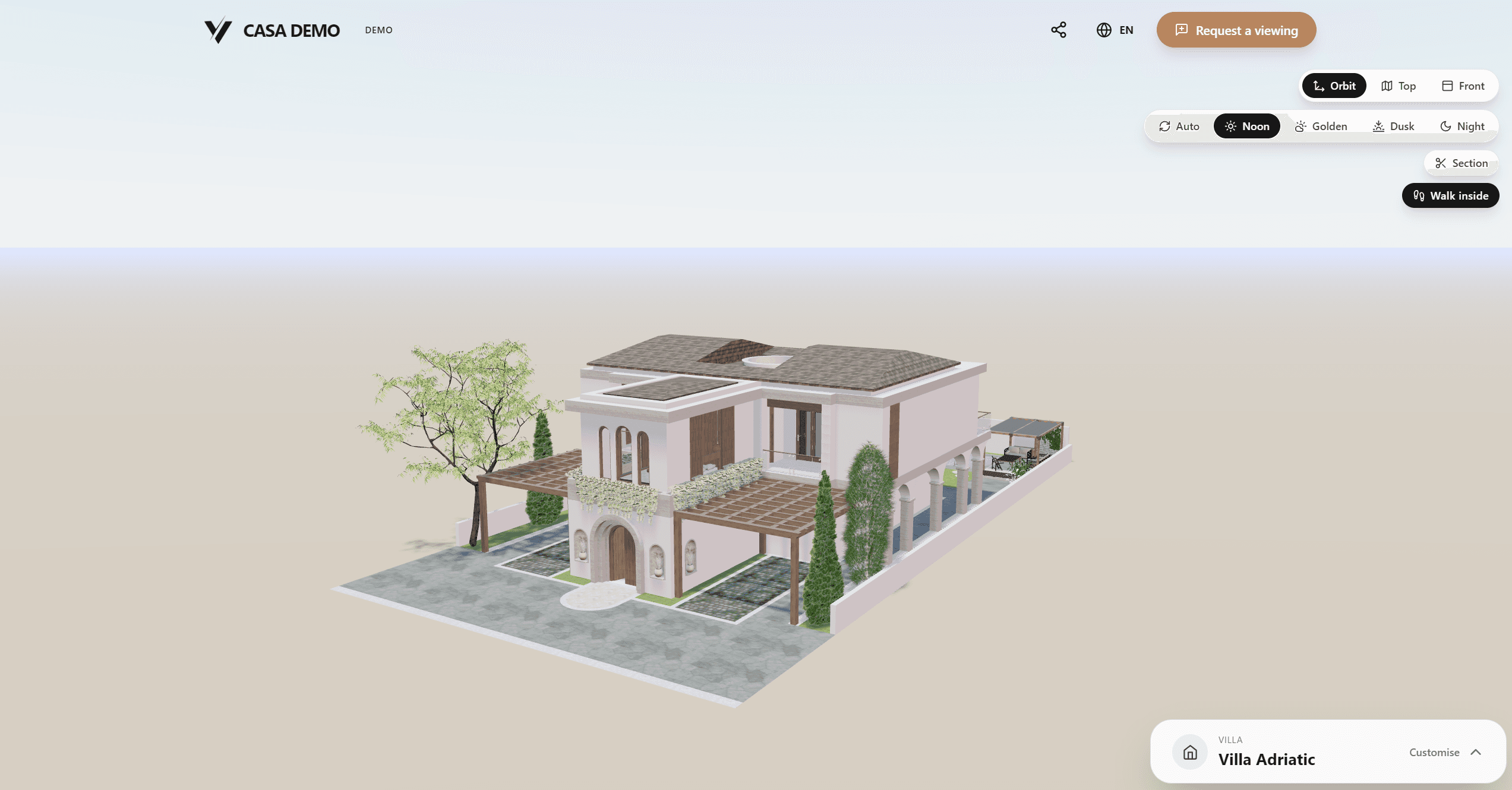
- Role
- Co-founder
- I own
- Frontend architecture, 3D pipeline, code review
- Team
- Three founders, no outside investors
- Runs in
- The browser. No app, no headset
The whole thing has to run in a browser tab on a phone a customer already owns. That constraint decides most of the engineering. Every product is one 3D model with variants generated on demand rather than a model per combination, and the assets have to be light enough to load over mobile data while still looking like the thing someone is about to spend five figures on.
Getting a client’s CAD files into something a browser can load is its own problem, so that runs as a separate Python service. Conversions are cached against a hash of the source file, which means the same model is never converted twice, and a failed conversion has defined behaviour rather than leaving a product half-broken in the catalogue.
It also has to drop into someone else’s storefront. The configurator embeds into Shopify, WooCommerce or Webflow with a single tag, so it has to behave inside a page it does not control.
- Frontend
- Turborepo monorepo, Next.js App Router
- Data
- Prisma, PostgreSQL, REST and JSON APIs
- Auth
- Clerk, OAuth and OIDC
- 3D pipeline
- Python and Flask, cached on object storage